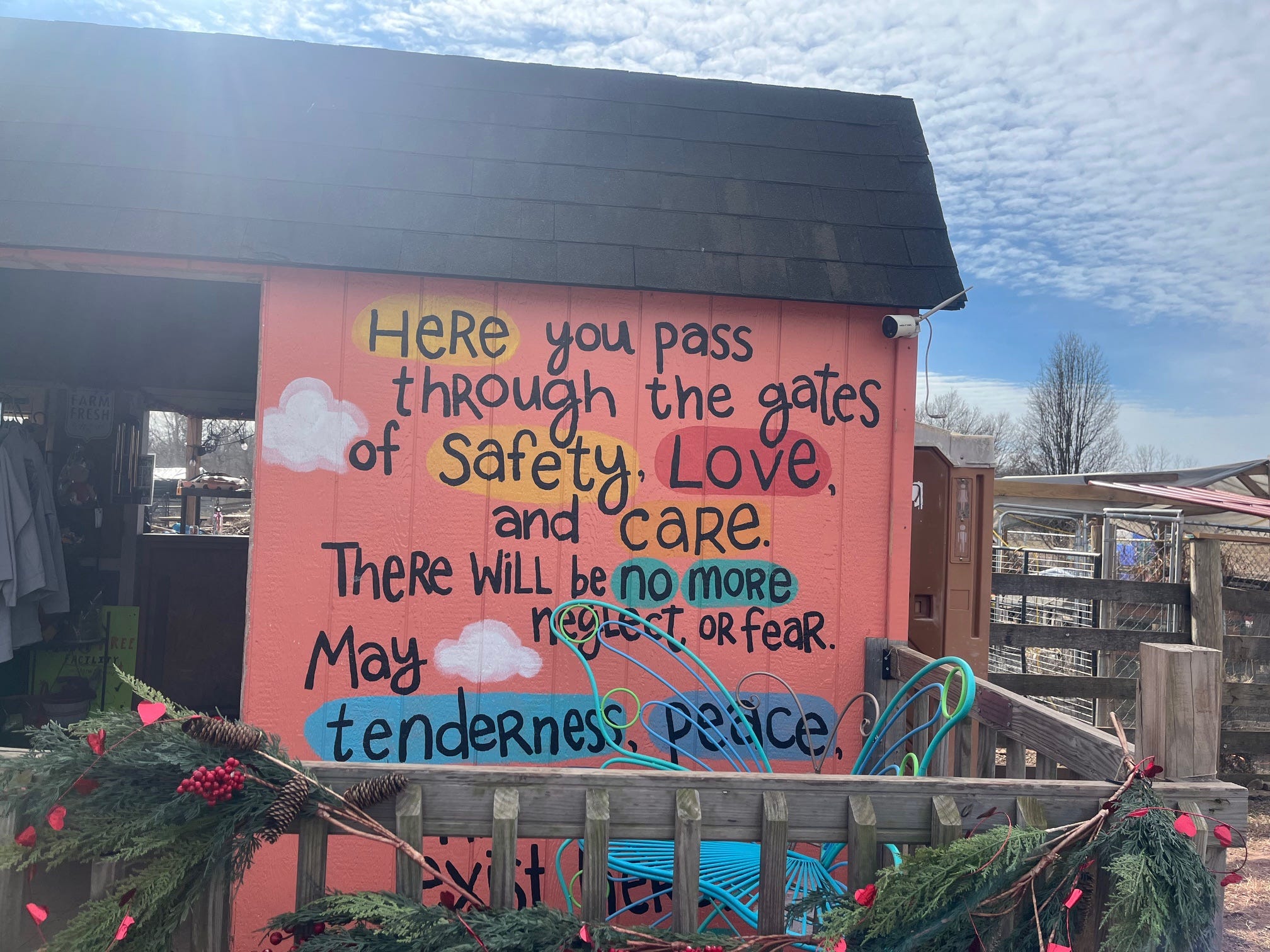
Fostering connection between humans and animals at a Virginia farm sanctuary
I talked to Renee about the benefits of spending time with animals, her work to educate people about where their food comes from, and the army of volunteers that keeps the sanctuary running smoothly.

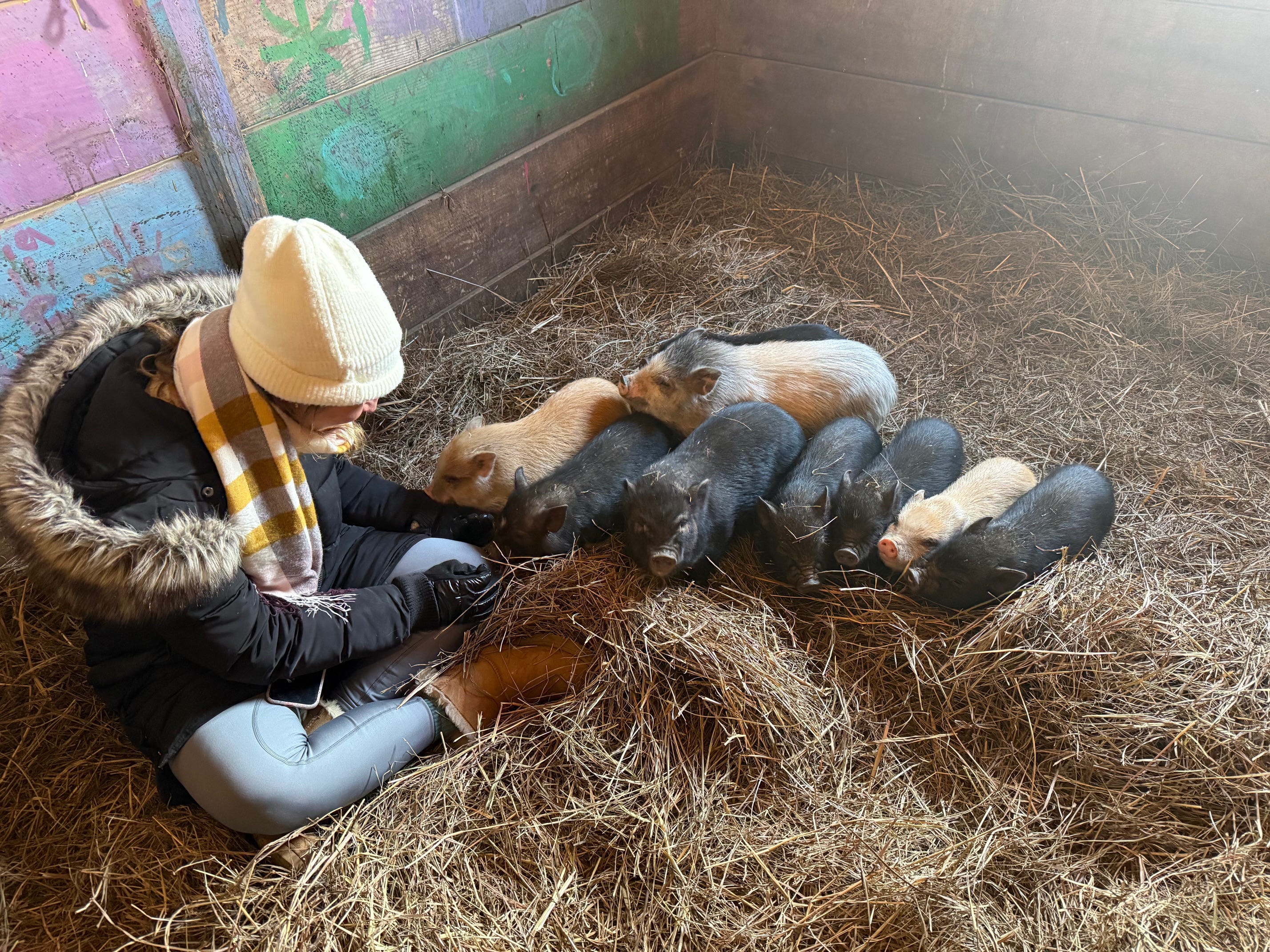
Renee founded Hope & Serenity Farm Sanctuary in Nokesville, Virginia, about an hour outside DC, in 2017. Hope & Serenity operates based on donations and an army of volunteers who do everything from helping with farm chores to picking up expired cans from food pantries that would otherwise end up in landfills. I connected with Renee through a fellow communications consultant who has volunteered at Hope & Serenity with his daughter for years. Hope & Serenity is home to hundreds of animals, including cats, chickens, cows, dogs, donkeys, ducks, geese, goats, horses, mules, pigs, sheep, turtles, and turkeys—almost all of whom Renee knows by name. Renee runs a wide range of education programs, which she discusses in our interview. I had the pleasure of visiting Hope & Serenity on a very cold day in January and meeting a number of the volunteers and animals, including adorable piglets.
Kathleen: Can you tell me what inspired you to found Hope & Serenity Farm Sanctuary?
Renee: I’ve rescued animals my whole life. The idea of this organization was to bring people and animals together so that they could make connections, because so many people do not have an opportunity to form relationships with farm animals. And I wanted them to get to know them like they know cats and dogs in the community, and give farm animals a chance at showing themselves for who they truly are instead of just seeing them for food.
Kathleen: What do you like most about working with animals?
Renee: I think the fact that they are some of the most forgiving beings on the planet. There’s no judgment, no criticism—just love, connection, healing. That is what they provide. And that’s what I like about them.
Kathleen: You have programs for everyone from preschool students to veterans. What are some tangible ways that you’ve seen people benefit from interacting with animals at the sanctuary?
Renee: There are a whole range of people that I have found need the company of animals and the unconditional love that they provide. These might be people who are suffering from anxiety or depression. They’re going through a hard time and they just need to sit with animals. No matter what’s going on in your life, if you come to the farm for an hour or two, it’s a really healthy distraction. Because the animals require and demand attention immediately.
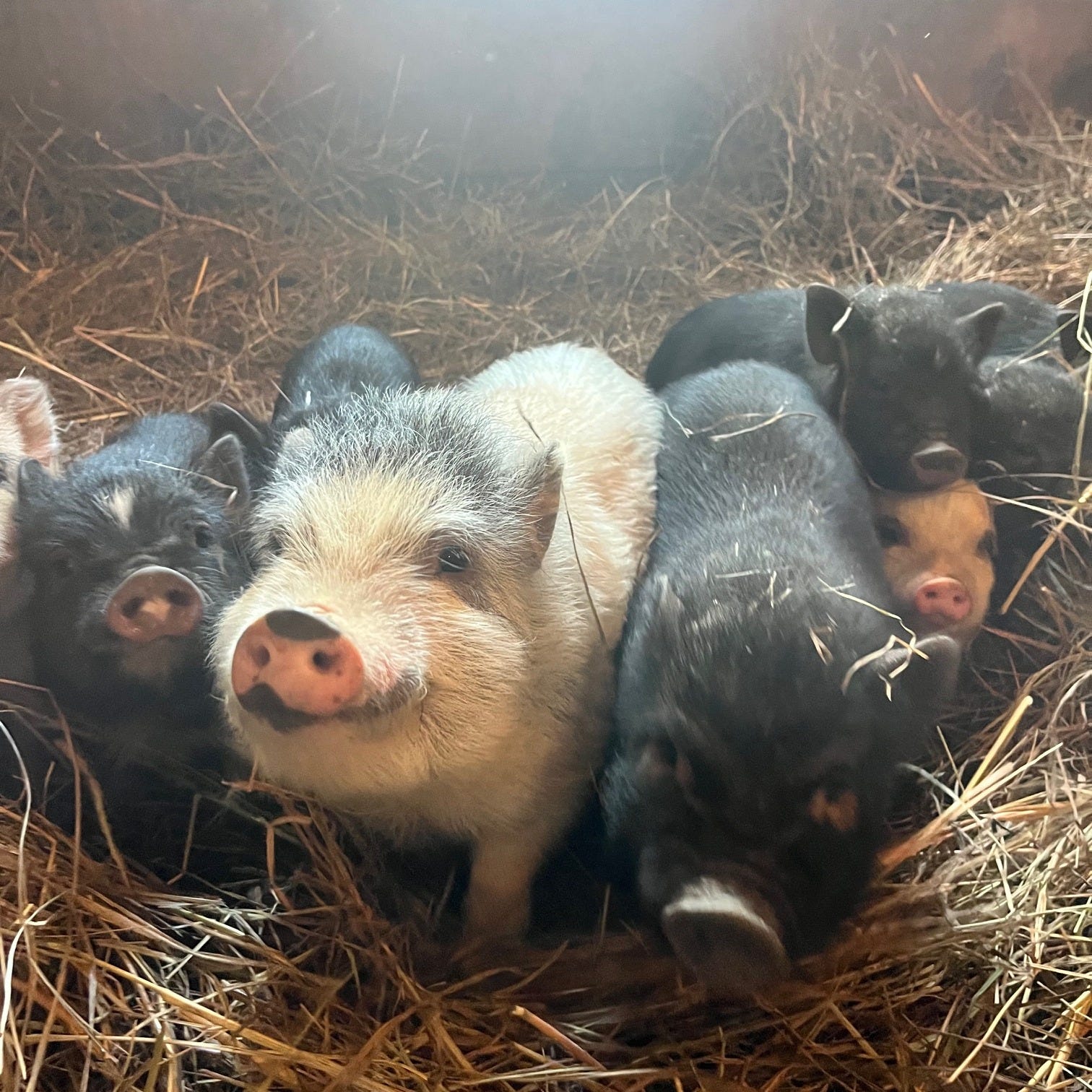
You walk in and you’ll be greeted by many of them: Do you have a treat for me? Do you have a pet for me? Do you have a kind word for me? Can I follow you around? And immediately it provides that healthy distraction that most of us need from the way our lives run on a daily basis.
Kathleen: Yeah, our phones for sure, and the news.
Renee: Definitely. I very rarely see anybody on their phone at the sanctuary. We don’t allow children to be on their phones at all unless they’re taking photos or calling their parents to pick them up. The sanctuary is also a healthy place for a workout. There’s always hard work to do. And there’s also connection with other people as well. Volunteers work together as a team to complete the tasks and care for the animals. It’s a very rewarding activity because you can see immediately the positive things that you’ve provided for them and how it makes their space better, their lives better.
Educationally, we have a preschool enrichment class and a class for kids who are home schooled. We have summer camps, spring break camps, winter break camps. I’m very big into education, and I want all kids to be able to come and practice patience and compassion. They walk away with a lot of knowledge about how to care for animals properly and how to interact with all the species that we have on the farm.
Kathleen: Where do the majority of the animals at the farm sanctuary come from?
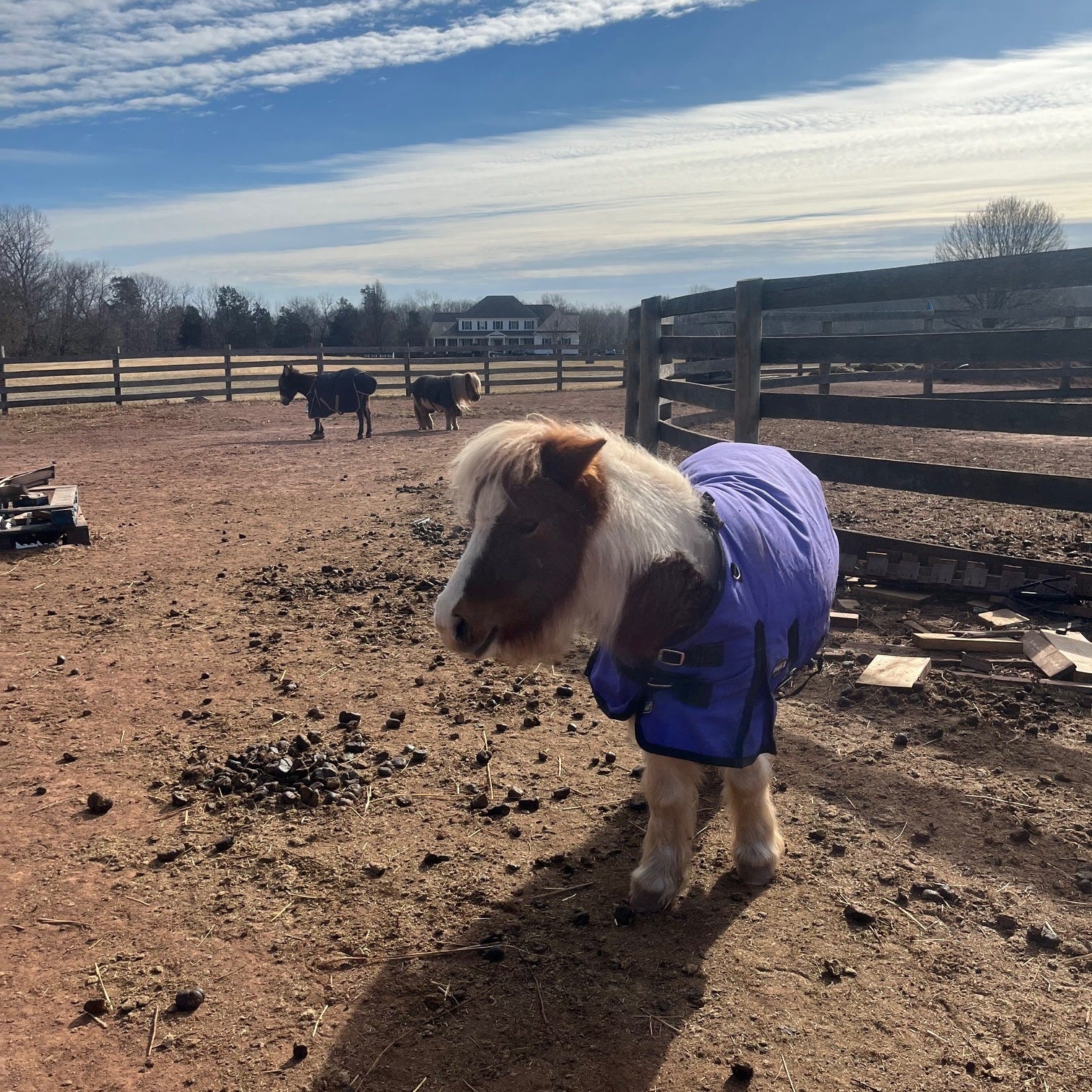
Renee: The majority of the animals come from people who are no longer able to keep them. I think a lot of people don’t know that if you have a pet goat or chicken or horse and you can’t keep them anymore, it’s not like when you have a dog or a cat and you can take them to the shelter. There isn’t a shelter to take a farm animal to. You usually have to sell them, give them away, or take them to an auction. A lot of these animals require specific zoning and specific outdoor space. If you love that pet, you probably don’t want to sell it, because I would say 90% of those kinds of animals end up as food.
The equines at our sanctuary come from kill lots where they were not sold at auction and had no other place to go. And a buyer buys them or takes them for free and sells them to Mexico and Canada for food and other byproducts. A lot of people don’t know that, and that’s part of my commitment to educating the public. We just rescued four donkeys from a local kill lot in Louisa, Virginia. One is only a little baby with her mama. Whenever we have the space and we are financially able, we take them from the kill lots.
Kathleen: I would imagine that anyone who volunteers there either is or becomes a vegetarian. Is that part of the education component?
Renee: I would love if everybody was a vegan, because the more that you learn about what happens in factory farms and even in backyard farms—I used to be somebody who said, well, at least if they raise the animal in a natural environment and it had pasture, it only had one bad day. But now my personal belief is that every killing, whether it’s for food or otherwise, is an act of violence. I believe that we, as an evolved society, do not need to eat meat or use animal byproducts to survive. We’re a very intelligent species, and it’s not necessary for us to exploit animals.
But do I push that on people? Absolutely not. Because I want people to come to that conclusion on their own after falling in love with a pig or a goat or a sheep. Every animal on our property is eaten somewhere in the world, from the rabbits to the guinea pigs to the horses and the mules. People will come here and say, my favorite animal is a cat, or a cow, but they end up falling in love with a pig or a sheep. And they’re like, I never knew that I could love this particular animal. If you just allow people to interact at their comfort level, to see a relationship come about is pretty magical.
Kathleen: Tell me about the types of activities that volunteers or kids at camp might do at the farm sanctuary.
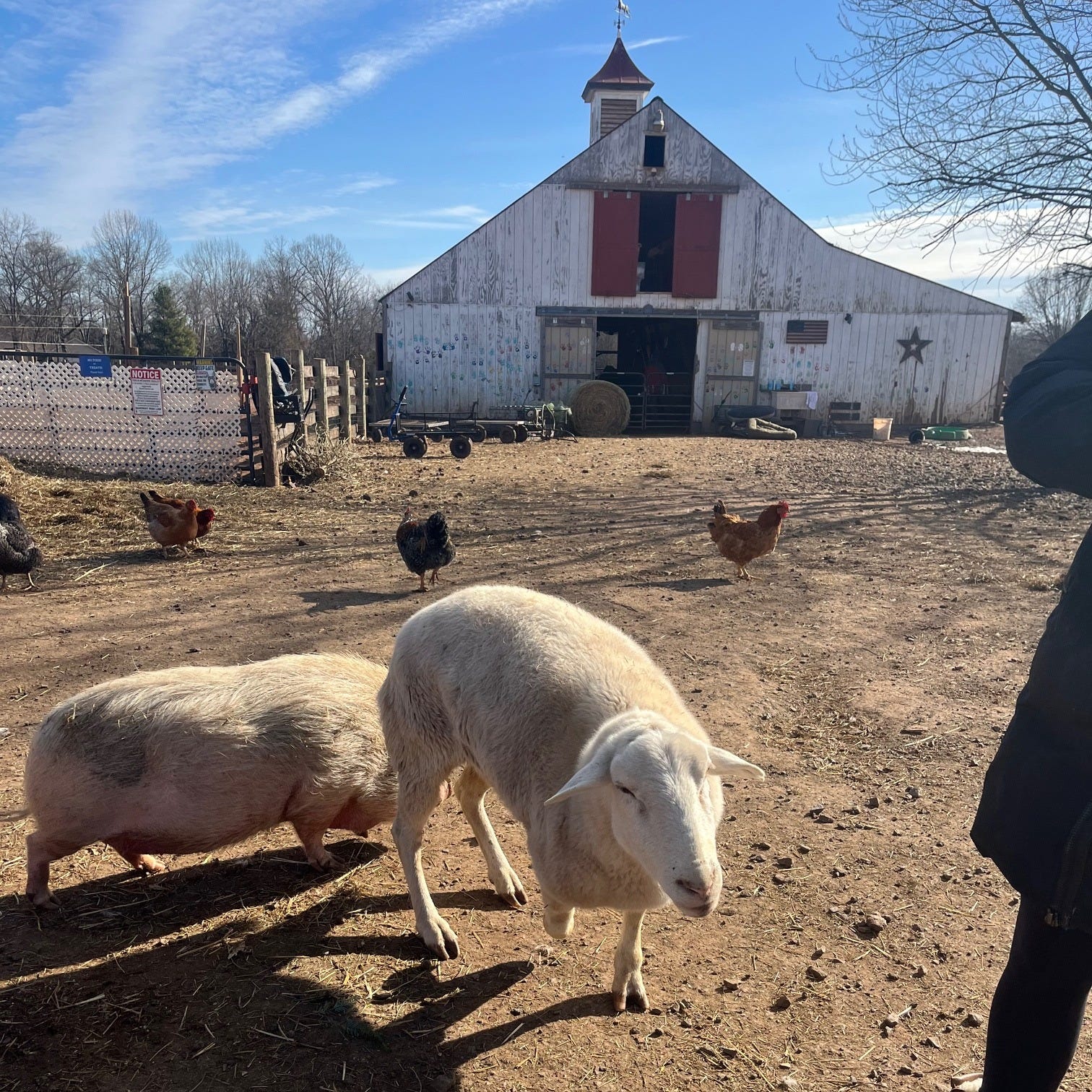
Renee: Everyone that comes to the farm, except for our tours, we include in the daily activities. The cleaning, the feeding, making sure everybody is comfortable and has not only their needs but their wants met. Usually when kids come to camp after the first day and we’ve toured and gone over safety etc., they do chores. We rotate them so they all have an opportunity to do different things. We also have a lot of play time with the animals. Our natural playground is in the same paddocks with the sheep, goats, pigs, and guard dogs. The kids may be jumping on a fallen tree or a wire spool or something like that, and the goats will be jumping up and down on those things as well. They’re playing right there with these animals, just like they might play in their backyard with their dogs or in the house with their cat.
The kids came up with something called the Goat Cafe, where they made this lemonade stand-type structure out of pallets. They stripped leaves from the trees and were serving the goats up at this little cafe they made. And they would say, oh, he wants this leaf, he wants this many leaves. They’re involving the animals in their play, and that is how these relationships are built. We also do humane education, where we talk about compassion. We talk about how to treat each other and treat our fellow species. What that looks like is based on their age level.
We do talk about where the animals come from and where they go so we can educate them about where their food comes from. Most children who come to us are not vegetarian or vegan. Parents want their kids to know where tomatoes come from and carrots come from. But most people these days, unless they have a backyard farm, do not include their kids in where their meat comes from. So for me, it’s very important that they also know that so that they themselves can make educated choices about whether or not they want to participate in that.
Kathleen: If people want to get involved, let’s say both people who are local to the DMV area and people who aren’t, how can they help?
Renee: There are many ways to be involved. People can take a tour and then become a volunteer. Every volunteer must take a tour first so they know what our mission is, why we do what we do, and where the animals come from. And then they can volunteer at their convenience. We’re open 365 days a year. There’s no commitment, and we take people when they are available so that it’s easier for people to say yes and not feel like they also have to drop out.
We also have other ways to volunteer. We have people who pick up vegetables that would be otherwise thrown away at local grocery stores. We currently have a volunteer who drives around neighborhoods picking up expired canned goods from food pantries that they cannot serve to people, but we can use for the animals so it doesn’t end up in our landfill. We have people who come specifically to do maintenance, put a few screws in here and there. We have people who help with social media, who come and take videos and pictures. We send those to our marketing person, who then can help us use those to get the word out about our sanctuary. People do all kinds of fundraisers to raise money for the sanctuary.
Kathleen: That’s great. And if people aren’t local, it seems like they can buy things from the wish list or donate to the sanctuary.
Renee: Actually, the number one way to get involved—I can’t believe I didn’t say this first—is sponsorship. Sponsorship is $25 a month. If you’re local, it means that you have what I consider a real country club membership to the farm. You get to come seven days a week, any time between 10 and 1 and visit your animal with no additional charge. And that’s for your entire family. That basically gives you admittance to the farm to enjoy it as often as you like.
We have lots of people that come often to visit. We have people that come several days a week. We have had several that come every day. We’re open on every holiday, so it makes it very easy when you’re off work. But even if you’re not local, that money goes to support the entire farm. Yes, of course you’re sponsoring that particular animal, but it helps us be able to say yes to other animals that need to come for sanctuary.
Kathleen: Last question, Renee, what about Hope & Serenity Farm Sanctuary or other parts of your life brings you joy on a regular basis?
Renee: The friendships that I’ve created at the sanctuary are very near and dear to my heart. Watching all of the visitors and volunteers enjoy the animals like I do brings me tremendous amounts of joy. But outside of the sanctuary, my grandchildren are the most important things in my life besides my kids. My grandchildren are at a magical age of seven and four, and I have just intense joy when I’m around them. Between those two things, I’m a pretty happy person.